How the brain processes language
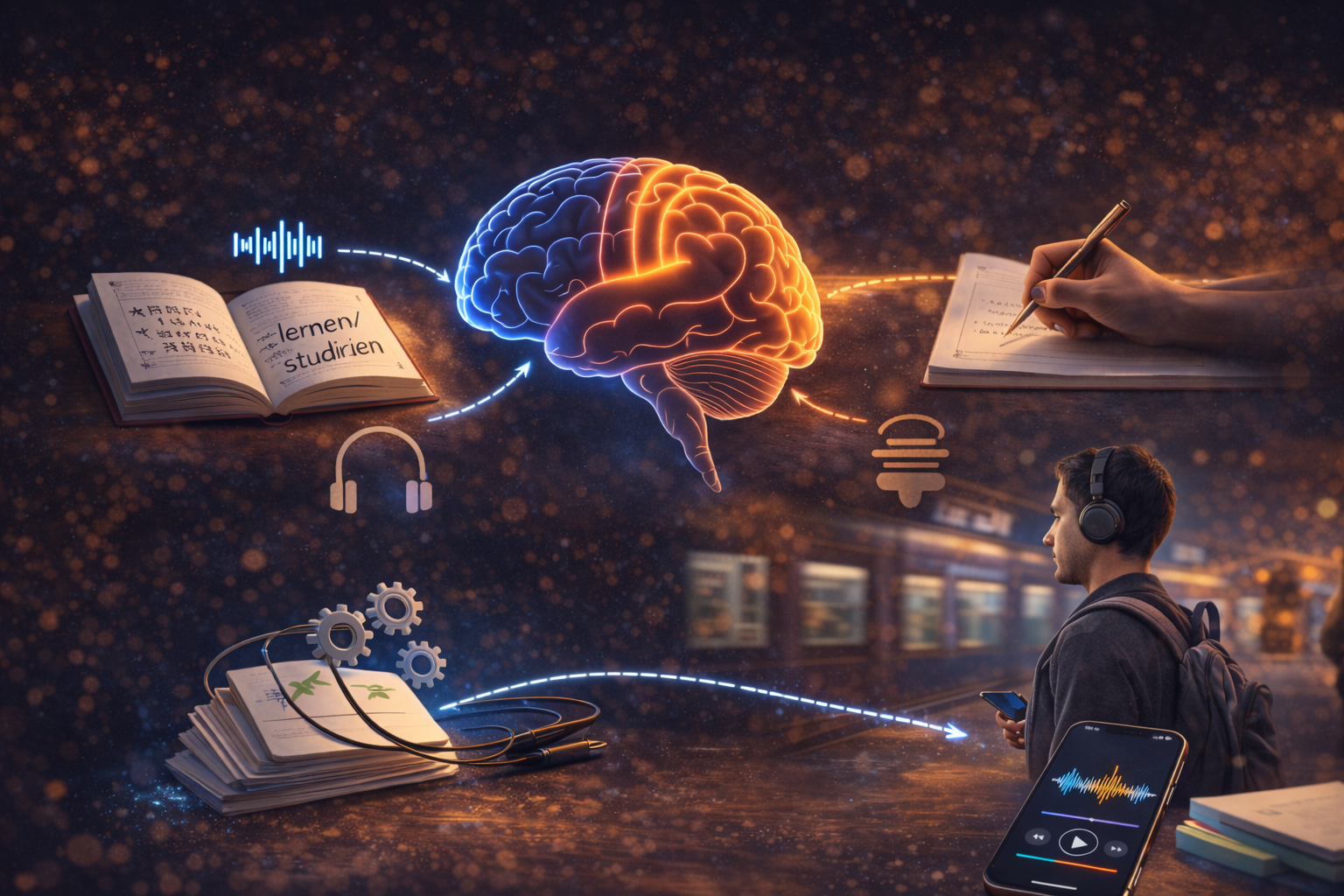
When you learn a language, the brain handles information through several channels at once: visual (reading), auditory (listening), and motor (speaking). These systems work together and influence how stable a memory becomes.
Reading alone mainly activates the visual channel. When you also hear a word, a second memory trace forms—the sound image. When you repeat aloud, a third component joins: motor movement.
Multiple memory traces at the same time
- Visual: the written form of the word
- Auditory: sound and pronunciation
- Motor: your own speech production
The more of these systems are activated together, the more stable storage in long-term memory tends to be. This principle is called multimodal learning.
For vocabulary, it means a word is not stored in isolation but as a connected pattern of meaning, sound, and movement.
Pronunciation and rhythm cannot be read from text
Written text conveys meaning, but only partly the actual sound of a language. Stress, rhythm, and intonation are central—yet they cannot be fully inferred from spelling.
Many learners can read words correctly but struggle to recognise them in conversation or use them fluently themselves.
- natural stress and sentence melody
- typical speech rhythm
- how words connect in spoken sentences
Audio closes this gap. You learn not only what a word means but how it really sounds and is used.
For languages with subtle sound differences or fast speech, this is essential for building genuine competence.
Passive learning in daily life
A major advantage of audio is that it fits everyday life. You can repeat vocabulary even when active study is difficult—for example while commuting, walking, or cooking.
These extra repetitions increase contact time with the language and help the brain get used to typical sound patterns.
Important: passive listening alone is not enough. The biggest effect comes when audio is used actively on a regular basis.
- listen deliberately rather than only in the background
- repeat short passages
- occasionally repeat aloud (shadowing)
The combination of passive exposure and active training is especially effective.
Better listening through real speech signals
Many learners understand written text well but struggle with spoken language. Often the ear has simply not been trained enough.
Spoken language is faster, includes reductions, and links words together. These features can only be trained through listening.
With audio you learn to recognise typical patterns:
- blended syllables
- connected words
- natural speaking speed
That noticeably improves understanding in real conversations.
Using audio effectively for vocabulary
- Short chunks: work with single words or short sentences.
- Repetition: hear content spread over several days (spaced repetition).
- Shadowing: repeat immediately to link listening and speaking.
- Combination: read, listen, and say the same word in one session.
This combination helps vocabulary move from recognition to active use.
Conclusion
Audio is not an optional extra but a core part of effective language learning. Combining sound, meaning, and your own speech creates a much more stable memory trace.
If you use audio consistently, you improve not only vocabulary but also pronunciation, listening, and fluency.
This approach is especially powerful when you use your own content: